
Alboraya-Almácera, 1348
We look back to the year 1348, when in the village of Alboraya-Almácera a Eucharistic Miracle occurred that recalls certain episodes from the life of Saint Francis of Assisi. These events show how all created beings exist in harmony when human beings live fully in the grace of God. It happened that a priest was crossing a river riding upon a mule, reverently carrying the Holy Viaticum for the sick in a pyx. Suddenly, he was surprised by a violent torrent of rushing water that caused both man and animal to fall.
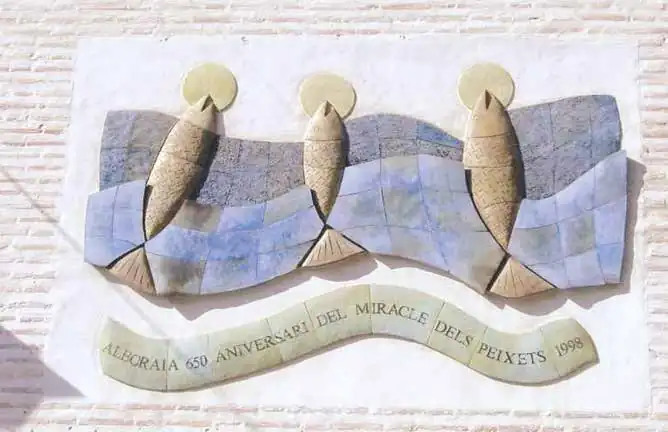 Mosaic outside the church
The priest lost hold of the pyx with its precious content, and the sacred Hosts fell into the rushing water, carried away by the current toward the mouth of the river. With great difficulty, the priest managed to escape from the waters. No sooner had he touched dry land and began lamenting the tragic loss than several fishermen approached him, filled with astonishment: they had seen three fish appear at the rivermouth, each holding an upright white disc in its mouth. The fishermen were perplexed because the three discs looked exactly like Communion Hosts.
Hearing this, the priest immediately ran back to the church to retrieve a chalice and return to the riverbank, without hesitating for a single moment to doubt the fishermen's report. When he arrived, his joy was immense upon seeing that the three prodigy fish were right there, holding their heads almost entirely out of the water, holding aloft the intact Hosts in their mouths like small sacred trophies. The priest knelt on the riverbank, extended the chalice, and began to pray as he had never prayed before in his life.
Moments later, he watched in awe as the three fish, one after the other, deposited the sacred Hosts into the chalice. Then they leaped back into the water, swimming rapidly until they vanished into the sea. At that moment, the priest realized he was surrounded by a multitude of men and women who had followed every detail of the event. Numerous historical documents testifying to the Miracle can still be consulted today. A small church was erected on the site of the Prodigy, featuring carved fish above the portal and paintings depicting the miraculous recovery.
Alcalá, 1597
In 1597, a repentant thief sought the sacrament of confession at the Jesuit church in Alcalá de Henares. He revealed that he had been part of a band of Moorish brigands who lived hidden in the mountains, dedicated to plundering churches and stealing monstrances and sacred vessels in nearby villages, committing terrible sacrileges. The repentant man carried with him twenty-four consecrated Hosts, which he returned in tears to his confessor. The priest, deeply moved, immediately informed his superior of what had happened.
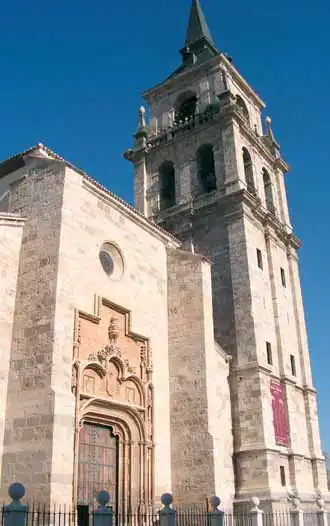 Jesuit Church where the Hosts were returned
Initially, the fathers planned to consume the Hosts during Holy Mass; however, fearing that the Hosts might have been poisoned—as had tragically occurred shortly before in Murcia and Segovia—they decided to preserve them inside a silver chest and await their natural decomposition. Eleven years later, all twenty-four Particles were found entirely fresh and intact. Father Luis de la Palma, a man of recognized virtue and then Provincial of the Jesuits, ordered the Hosts transferred to a damp basement alongside several unconsecrated host wafers.
Months later, the unconsecrated wafers deteriorated and turned to mold due to the intense humidity; by contrast, the consecrated Hosts remained completely uncorrupted and intact. Only after six years did Father de la Palma decide to make the Miracle of the incorrupt Hosts public. In the meantime, additional examinations were conducted by Dr. García Carrera, royal physician and university professor, alongside distinguished theologians who certified the incorruption of the Hosts as a genuine miracle.
In 1619, ecclesiastical authorities granted official approval for public veneration. The Holy Hosts were adored publicly by King Philip III himself, who in 1620 presided over a solemn procession accompanied by the entire royal family. The sacred Particles were later translated to the Magistral Church when Charles III expelled the Jesuits from Spain. In 1936, during the Spanish Civil War, the miraculous Hosts were prudently hidden by priests who were martyred shortly thereafter by communist revolutionaries who burned the church.
To this day, the exact hiding place has not been discovered despite extensive searches in both the church and the crypt. An erudite biographer of the city, Don Anselmo Raymundo Tornero, who wrote a volume meticulously documenting the historical records of the Miracle, exclaimed: “May God grant us a new Miracle by restoring them to our sight!”
Alcoy, 1568
The Eucharistic Miracle of Alcoy in the year 1568 manifested through the miraculous recovery of consecrated Hosts that had been sacrilegiously stolen. The Prodigy is commemorated each year by the citizens of Alcoy with a grand civic and religious festival celebrated during Corpus Christi.
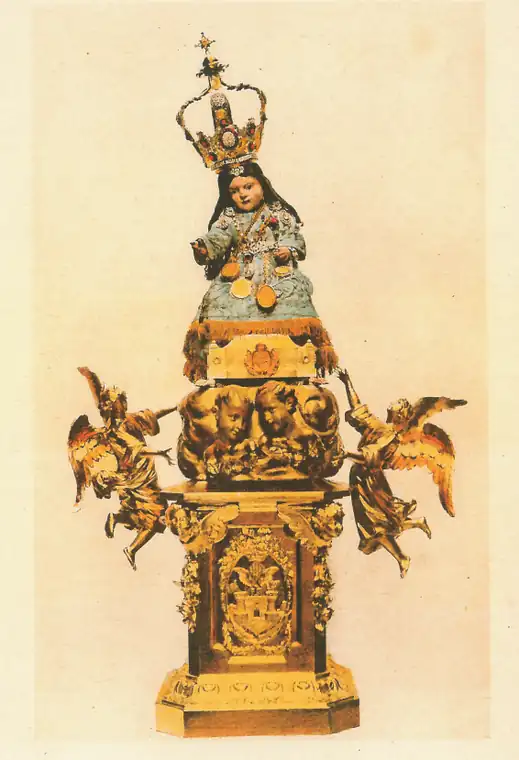
The house of the thief was eventually transformed into an oratory that remains open to pilgrims to this day, and the relics are venerated in the Monastery of the Santo Sepulcro. On January 29, 1568, an Alcoy resident of French origin named Juan Prats, finding himself in severe financial distress, broke into the parish church and stole numerous sacred vessels. Among the plundered items was a rich silver ciborium containing three consecrated Hosts.
Juan Prats quickly consumed the three Particles and buried the silver chest beneath logs in his stable. The next morning, Don Antonio, the parish priest, discovered the sacrilegious theft. Filled with sorrow, he tolled the church bells to alert the village, and soon the entire population of Alcoy gathered in the church to pray. An exhaustive search began immediately, but yielded no clues. Near Juan Prats' house lived a devout widow named María Miralles, who kept a beloved statue of the Infant Jesus in her home.
Deeply grieved by the profanation, she began praying fervently before the statue, begging that the sacred Hosts might be recovered. A few hours after her intense prayer, María saw the small carved hand of the Infant Jesus move and point its finger directly toward the neighboring house of Juan Prats. She hastened to inform the civil authorities. At that very moment, the parish priest, moved by an irresistible inner prompting, had already walked toward Juan Prats' garden.
He entered the stable, lifted the logs of wood, and uncovered the silver chest with the three consecrated Hosts resting inside. Juan Prats was seized with profound repentance and confessed the theft, astonished beyond words by the presence of the Hosts, unable to comprehend how they could be there when he had consumed them with his own mouth. Contemporary legal and ecclesiastical records documenting the Prodigy and the miraculous statue of the Infant Jesus are preserved today in the Monastery of the Holy Sepulchre in Alcoy.
Caravaca de la Cruz, 1231
Among the many historical documents testifying to this Miracle, the most authoritative is the contemporary account written by Father Gilles de Zamora, Franciscan historiographer. We know with historical certainty that a priest, Father Ginés Pérez Chirinos of Cuenca, traveled into Moorish-controlled territory in the Kingdom of Murcia to preach the Gospel. He was captured and brought before the Moorish king, Zeyt-Abu-Zeyt, who interrogated him concerning various tenets of the Christian faith, showing particular curiosity about the meaning of the Catholic Mass.
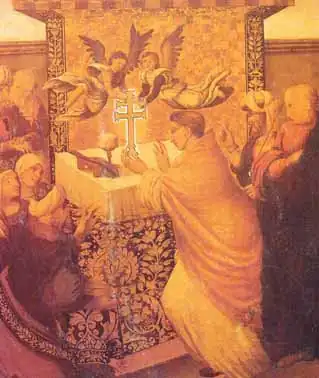 Interior of the Church of the Holy Cross
The priest offered a detailed explanation of the sublime sacrifice of the Mass. Fascinated by the friar's explanation, the king commanded that a Mass be celebrated immediately in his presence. Because the priest lacked the necessary vestments and sacred vessels, the king dispatched envoys to the nearby Christian town of Cuenca to bring everything required for the celebration. However, as the Mass began, the priest became deeply troubled upon realizing that the altar crucifix had been omitted.
The king asked the cause of his distress, and the priest explained the oversight. But the king responded: “Could it not be that one?” Indeed, at that precise moment, two angels descended visibly and placed a two-armed patriarchal cross upon the altar. The priest gave thanks to the Lord with profound emotion and continued the liturgy. Yet the miracle did not end there. At the moment of consecration, the king beheld a radiant, beautiful child appearing in place of the Host, gazing upon him with infinite sweetness.
Moved to the depths of his soul by these supernatural manifestations, the king and his entire household converted to Christianity and received Holy Baptism. Zeyt-Abu-Zeyt took the Christian name Vicente, and his wife became Elena. From that day, May 3, 1231, the city was known as Caravaca de la Cruz. In recent times, the Holy See granted Caravaca de la Cruz a perpetual jubilee year, making it the fifth holy city in the world privileged to celebrate a perpetual Holy Year every seven years in perpetuum, alongside Santiago de Compostela, Santo Toribio de Liébana, Rome, and Jerusalem.
Cimballa, 1370
In 1370, the parish priest of Cimballa began to experience tormenting doubts regarding the Real Presence of Jesus in the Blessed Sacrament while celebrating Holy Mass. At that very instant, the consecrated Host transformed into living Flesh and began shedding Blood until the corporal was completely saturated. This prodigy fortified the wavering faith of the celebrating priest, who, filled with contrition, spent the remainder of his days in a monastery dedicated to prayer. Each year on September 12, the Eucharistic Miracle that occurred in the Church of the Purification of Our Lady is commemorated.
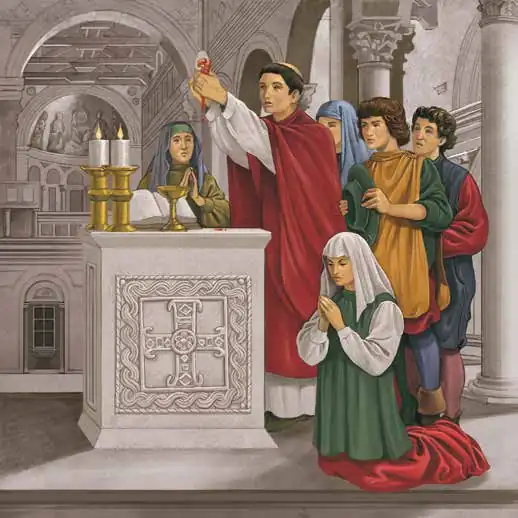
The parish priest, Father Tomás, had suffered from agonizing doubts regarding the Real Presence. During a Sunday Mass, immediately after pronouncing the sacred words of consecration, he beheld the Host transform into living Flesh, profusely bleeding onto the corporal. The priest wept tears of bitter repentance and adoration. The faithful, seeing his overwhelming emotion, approached the altar and were able to gaze directly upon the Miracle.
The sacred Relic was carried in solemn procession, and news of the event spread throughout the kingdom. Over the years, numerous miracles and graces were attributed to the “Most Holy Doubted Mystery” (Santísimo Misterio Dudado), becoming an object of deep veneration among the faithful. The Relic of the bloodstained corporal is exposed for public veneration each year on September 12, on the anniversary of the Miracle.
Daroca, 1239
The Miracle of Daroca took place shortly before one of the many decisive battles fought by Spanish Christian knights against the Moors. The Christian commanders requested that the military chaplain celebrate Holy Mass, but a few minutes after the consecration, a surprise enemy assault forced the priest to suspend the liturgy and conceal the consecrated Hosts within an altar cloth. Victory favored the Spanish forces.
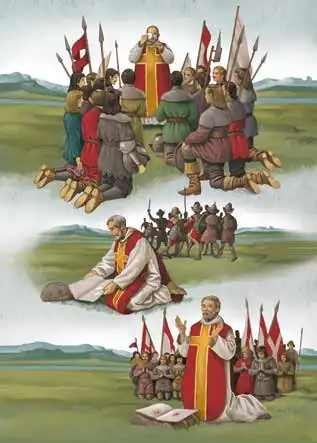
In 1239, the Christian forces of Daroca, Teruel, and Calatayud (in Aragon) allied to recapture the Castle of Chío in Luchente, which was held by the Moors. The chaplain, Father Mateo Martínez of Daroca, celebrated Holy Mass prior to the assault, consecrating six Hosts intended for the six captains commanding the troops: Don Jiménez Pérez, Don Fernando Sánchez, Don Pedro, Don Raimundo, Don Guillermo, and Don Simón Carroz.
A sudden enemy counterattack forced the chaplain to interrupt the Mass. He wrapped the six consecrated Particles within the corporal and hid them beneath a stone. After the enemy troops were repulsed, the commanders requested Holy Communion in thanksgiving for their initial survival. Father Mateo went to the hiding place to retrieve the sacred Hosts and found them bathed in fresh, living Blood. The commanders regarded this prodigy as a glorious sign of divine favor and victory.
After devoutly receiving Communion, they affixed the bloodstained Corporal to the tip of a spear as a sacred battle standard. Advancing into battle under this Eucharistic banner, they stormed the Castle of Chío and won a stunning, complete victory, which all attributed to the Eucharistic Miracle. The six captains hailed from different regions of Spain, and each vigorously argued that the sacred Corporal should belong to his native city. Amid heated debate, the lot was drawn three times, and each time the city of Daroca was chosen. To settle the matter definitively, an agreement was reached.
The Corporal was placed upon the back of a blindfolded mule, which was allowed to wander freely, trusting that the sacred cloth would remain wherever the beast stopped, according to divine will. The mule journeyed for twelve days, traversing nearly two hundred miles, until, utterly exhausted, it collapsed and died directly before the Church of San Marcos in Daroca. Shortly thereafter, the magnificent Basilica of Santa María was built, where the bloodstained Corporal is venerated to this day enshrined in an exquisite reliquary.
Gerona, 1297
The Miracle occurred in the church of the ancient Benedictine monastery of San Daniel in Girona, where until the last century a beautiful reliquary containing a bloodstained linen was preserved, locally known as the “Sant Dubt” or the “Holy Doubt.” In 1297, during a Holy Mass celebrated in the convent chapel, the religious sisters noticed that the priest hesitated with evident perplexity when attempting to consume the consecrated Host.
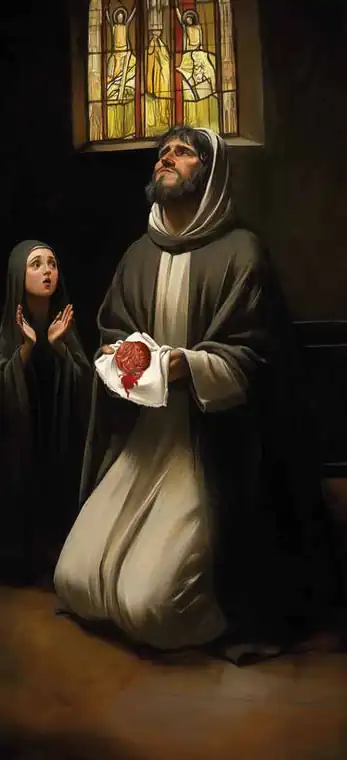
A nun in the choir loft directly overlooking the altar observed the celebrant take something from his mouth, wrap it carefully in the corporal, and place it at the corner of the altar table. When Mass concluded, she hurried to the altar to examine what the priest had hidden within the white cloth. Filled with holy awe, she discovered a piece of bleeding Flesh soaked in living blood. Later, the priest confessed with deep contrition that he had suffered severe interior doubts regarding the Real Presence of Christ in the Eucharist.
At the very instant he placed the sacred Host upon his tongue, It expanded in volume and assumed the fleshy consistency of true meat, to such an extent that he was physically unable to swallow It. For this reason, he had reverently wrapped It in the corporal and placed It upon the altar. The miraculous Particle was placed in an artistic reliquary. Although many historical records were lost over time and the reliquary and bloodstained linen were destroyed during the tragic turmoil of the 1936 Civil War, memory of the Miracle remains vividly honored in Girona.
Gorkum-El Escorial, 1572
Although the Prodigy occurred in the Netherlands, the Relic of this Eucharistic Miracle is venerated to this day in Spain, in the Royal Monastery of San Lorenzo de El Escorial. In 1572, Calvinist mercenaries plundered a Catholic church in Gorcum, desecrating a consecrated Host by puncturing It in three places with their boot spikes. Living Blood immediately poured forth from the three perforations, and King Philip II later enshrined this relic in Spain.
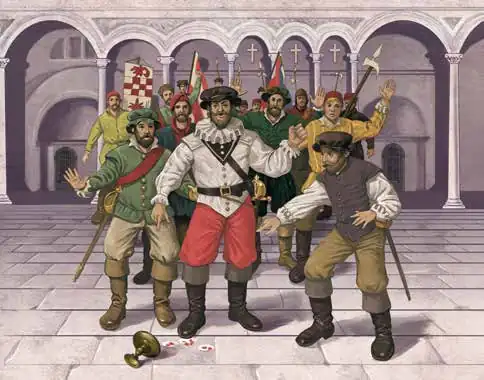
The “Sagrada Forma,” preserved incorrupt to this day, is venerated in the sacristy of the Royal Monastery of San Lorenzo de El Escorial. In the year 1572, the Host was profaned in Gorcum (Netherlands) by radical Calvinist followers of Zwingli known as the “Sea Beggars” (Gueux de la Mer), hired by the Prince of Orange. Invading the city, they plundered churches and broke into the cathedral sanctuary.
They struck the tabernacle with iron maces, wrenched free the monstrance containing the Blessed Sacrament, tore the Host from It, and trampled It on the ground. One of the desecrators stepped on It, creating three perforations because his boot soles were studded with iron nails. At that exact moment, living Blood welled up from the three punctures, forming three circular wounds. Even today, one can observe this miraculous Host intact.
One of the mercenaries, seized with sudden remorse and terror at the sight of the bleeding Host, alerted Canon Jean van der Delft, who managed to rescue the sacred relic and carry It to safety. After several historical transfers, the Relic was presented in 1594 as a gift to King Philip II of Spain. Since that time, the Host has been preserved in El Escorial. Four magnificent bas-reliefs in marble and bronze by Filippo Filippini adorn the altar, alongside Claudio Coello's (1621-1693) masterpiece depicting King Charles II inaugurating the glorious tabernacle. Each year on September 29 and October 28, the Sagrada Forma is carried in solemn procession through El Escorial.
Guadalupe, 1420
Today, in the renowned Sanctuary of Guadalupe in the region of Extremadura (then Archdiocese of Toledo), pilgrims can venerate the precious Relics of the bloodstained Corporal and Pall (the pall being a small, starched square of linen used to cover the chalice and paten). These linens were used during the miraculous Mass celebrated by the Venerable Father Pedro Cabañuelas, a priest of heroic Eucharistic devotion who spent whole hours in adoration day and night before the Blessed Sacrament.
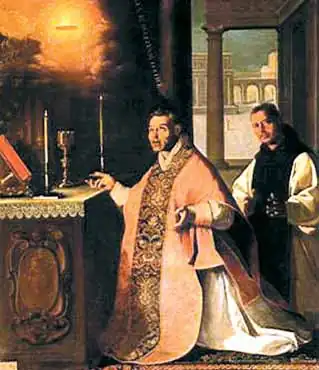 Francisco de Zurbarán, depiction of the Miracle
For a time, Father Pedro had been sorely tempted by persistent doubts regarding the reality of transubstantiation; but in the year 1420, all his doubts were permanently dissolved. As was his daily custom, he began celebrating Holy Mass. At the moment of consecration, a dense cloud descended from above, obscuring his vision and resting directly upon the altar table. The priest implored the Lord to dispel his interior torment. Slowly, the mysterious cloud vanished, revealing an extraordinary vision.
The consecrated Host was suspended in mid-air above the chalice, and from It copiously streamed large drops of living Blood, rapidly filling the chalice until it overflowed onto the corporal and pall. Then the priest heard a heavenly voice: “Conclude the Holy Mass, and do not reveal for now to anyone what you have seen.” Nevertheless, the miracle was witnessed by several religious present in the choir.
News of the prodigy quickly spread across Spain, reaching King John II of Castile and Queen María of Aragon. Both monarchs became fervent devotees of the Eucharistic Miracle of Guadalupe, requesting in their royal wills to be buried close to the tomb of the Venerable Father Pedro Cabañuelas.
Ivorra, 1010
In the year 1010, while Holy Mass was being celebrated, the consecrated wine in the chalice miraculously transformed into living Blood. In the eleventh century, various theological controversies and heresies challenging the Real Presence of Christ in the Eucharist began circulating throughout Europe. The parish priest of Ivorra, Father Bernat Oliver, had been troubled by these doubts, questioning whether bread and wine truly became the Body and Blood of Christ. While celebrating Mass, the Miracle occurred.
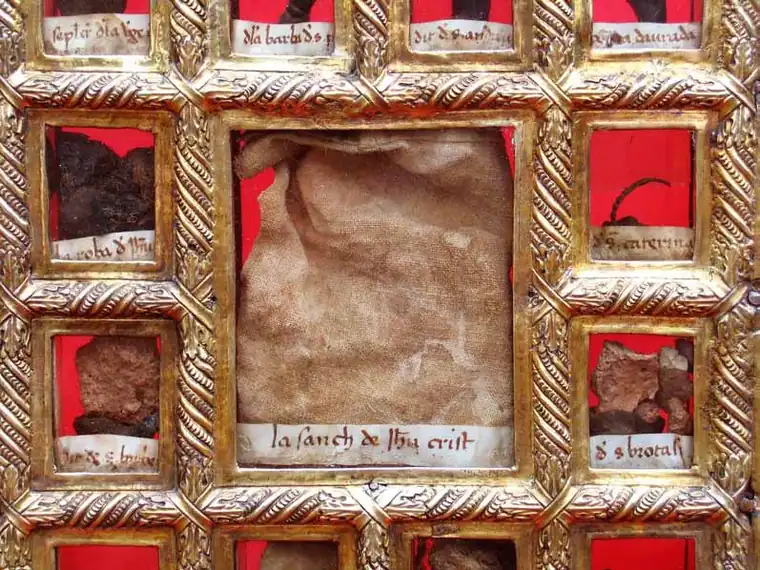
The consecrated wine in the chalice bubbled over as living Blood, spilling onto the altar cloth and trickling down onto the stone floor of the sanctuary. Saint Ermengol, Bishop of Urgell, upon receiving news of the occurrence, traveled personally to Ivorra to investigate and verify the Miracle. Through his good offices, the report was presented to Pope Sergius IV in Rome, who issued a solemn pontifical bull confirming the miraculous event.
The sacred Relics and the papal document were enshrined above the high altar of the parish church of San Cugat in Ivorra, consecrated in 1055 by Bishop Guillem of Urgell. Today, the sacred relics are preserved within an exquisite Gothic reliquary crafted in 1426, containing the bloodstained altar cloth alongside relics gifted by Pope Sergius IV to Saint Ermengol. A larger sanctuary was subsequently constructed to accommodate the constant influx of pilgrims. To this day, on the second Sunday of Easter, the feast of “The Holy Doubt” (La Santa Duda) is celebrated in memory of the priest's doubt and God's miraculous response.
Moncada, 1392
The Miracle of Moncada took place before a priest who was tormented by doubts regarding the validity of his priestly ordination. This anguish was miraculously dispelled when the Infant Jesus visibly appeared within the consecrated Host. At the close of the fourteenth century, following the outbreak of the Western Schism, French cardinals elected an antipope in hopes of returning the papacy to Avignon, causing widespread confusion among clergy who feared their ordinations were invalid.
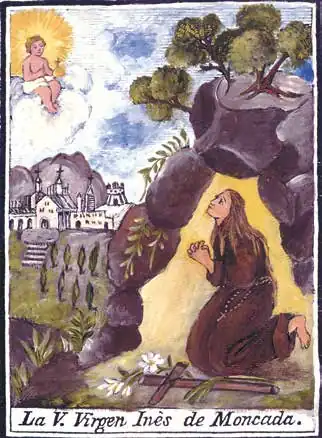
This Miracle is recorded in the Annales Ecclesiastici of Father Odorico Raynaldi and in numerous contemporary archival documents. The election of Pope Urban VI (April 18, 1378) was contested by French cardinals, who on September 20, 1378, elected the antipope Clement VII. The schismatics attempted to seize Rome by force of arms, but being defeated, withdrew to Avignon. In this climate of uncertainty, a priest in Moncada named Mosén Jaime Carrós lived in constant dread that his ordination was invalid, fearing that he was distributing unconsecrated bread and administering sacraments falsely. He begged God for a sign, and on Christmas Day 1392, he received an answer.
That day, a noblewoman named Ángela Alpicat attended Mass with her five-year-old daughter, Inés (the future Saint Inés of Moncada). When Mass concluded, the child refused to leave the church, telling her mother that she wanted to stay and play with the wondrous little child the priest had held in his hands during the consecration. Doña Ángela informed the priest of her daughter's words. Father Carrós interrogated the child thoroughly, and she answered all questions with remarkable clarity and simplicity.
To test the child further, he invited them to return to Holy Mass the next day. The priest prepared two hosts, but consecrated only one. Holding the consecrated Host, he asked the child what she saw. She answered: “I see the Infant Jesus.” Then he elevated the unconsecrated wafer and asked the same question. Inés answered: “I see a small white disc.” With his doubts completely resolved, the priest wept tears of joy and relief, knowing that even though he had been ordained by a bishop of the Avignon obedience, God remained faithful to apostolic succession through the laying on of hands.
Montserrat, 1657
The Eucharistic Miracle of Montserrat invites meditation upon the infinite value of every Holy Mass, which makes present the one sacrifice of Christ on Calvary. This historical event is chronicled in detail by the Benedictine historian Father Francisco de Paula Crusellas in his work Nueva historia del Santuario y Monasterio de Nuestra Señora de Montserrat. In 1657, the Most Reverend Father Bernardo de Ontevieros, Abbot General of the Benedictine Order in Spain, and Abbot Millán de Mirando were staying at the Monastery of Our Lady of Montserrat to conduct conferences.
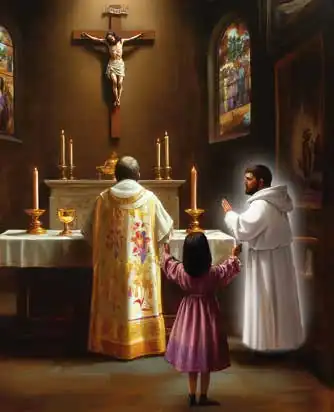
During one of their sessions, a woman arrived at the monastery accompanied by her young daughter. She pleaded with Abbot Millán to celebrate three Masses of suffrage for her deceased father, firmly convinced that his soul would thereby be delivered from the purifying flames of Purgatory. Moved by the child's tears, the good abbot agreed to celebrate the first Mass of suffrage the following morning. During the consecration, the girl cried out that she saw her father kneeling upon the step of the high altar, surrounded by frightening flames of fire.
The Father General, seeking to test the truth of her vision, instructed the girl to hold a handkerchief toward the flames surrounding her father. Obediently, the child held the cloth toward that invisible fire which only she could see. At that moment, before the astonished eyes of all the monks, the handkerchief caught fire and burned with bright flames in mid-air. During the second Mass, the child reported seeing her father standing beside the deacon, dressed in brightly colored garments. At the third Mass, he appeared clothed in robes of dazzling white like snow. As Mass concluded, the girl exclaimed with joy: “Now my father is ascending into Heaven!” She thanked the monks on his behalf, as he had instructed her to do, in the presence of the Abbot General, the Bishop of Astorga, and the community.
O'Cebreiro, 1300
The Eucharistic Miracle of O Cebreiro occurred during Holy Mass when the consecrated Host visibly transformed into Flesh and the wine into living Blood, spilling out of the chalice and staining the corporal. The Lord wrought this prodigy to revive the weak faith of a celebrating priest who doubted the Real Presence of Jesus in the Holy Eucharist. The Sacred Relics of the Miracle are preserved to this day in the very church where the prodigy took place, drawing thousands of Camino de Santiago pilgrims every year.
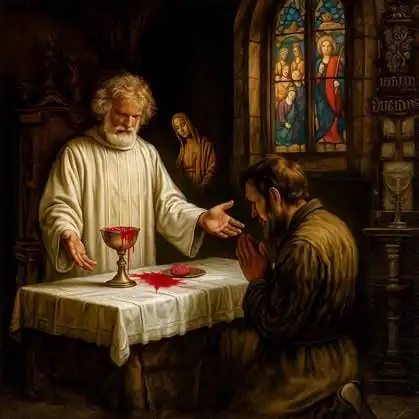
It was during the bitter, frozen winter of the year 1300. A Benedictine monk was preparing to celebrate Holy Mass in the lateral chapel of the convent church of O Cebreiro, high in the snow-covered mountains. He murmured resentfully to himself, thinking that on such a ferocious day of blizzards, freezing winds, and heavy snow, no one would be foolish enough to come to Mass. But he was mistaken. A humble farmer from Barxamaior named Juan Santín had battled the snowdrifts and mountain gale to assist at the Holy Sacrifice.
The celebrating priest, devoid of living faith in the Blessed Sacrament, inwardly scorned the farmer's sacrifice for making such an effort for a mere piece of bread. At that very moment of consecration, the Host transformed into living Flesh and the wine into bubbling Blood that overflowed the chalice onto the corporal. Concurrently, the wooden statue of the Virgin Mary bowed her head in reverent adoration of the Blessed Sacrament. The Lord opened the eyes of the incredulous monk and rewarded the profound faith of the peasant. For nearly two centuries, the miraculous Flesh remained on a paten until Queen Isabella the Catholic, traveling on pilgrimage to Santiago de Compostela in 1486, visited the shrine and gifted a magnificent rock crystal reliquary to enshrine the Relic.
Onil, 1824
The Eucharistic Miracle of Onil took place after a monstrance containing a consecrated Host was stolen from the parish church. Several days later, a woman from the neighboring town of Tibi discovered the monstrance and the stolen Host lying in a vegetable field. Exactly 119 years later, on November 28, 1943, Don Guillermo Hijarrubia, delegate of the Archbishop of Valencia, officially confirmed the authenticity of the Miracle, verifying the completely incorrupt preservation of the sacred Host. Today, after two centuries, It remains entirely fresh and intact.
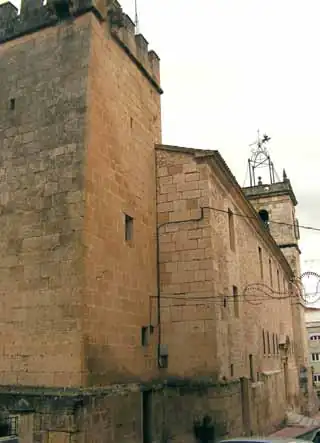 Stained glass windows depicting the Miracle in Onil
On November 5, 1824, the monstrance containing the Blessed Sacrament and other sacred vessels were stolen from the parish church of Onil by an individual named Nicolás Bernabeu, who in his youth had served as an altar boy in that very church. News of the sacrilegious theft spread rapidly throughout the province. Consequently, when Nicolás attempted to sell the stolen gold and silver vessels in Alicante, an alert merchant grew suspicious and notified the authorities.
Nicolás Bernabeu was arrested, but obstinately refused to reveal where he had concealed the monstrance with the Sacred Host. The faithful and civil authorities searched the countryside for days, until in the neighboring village of Tibi, where the thief had stayed, Doña Teresa Carbonell discovered the stolen monstrance lying in a spot known as “La Pedrera” on November 28, 1824. The woman reverently carried the sacred Relic to Onil, where It was received with immense jubilation.
On November 28, 1943—exactly 119 years later—Don Guillermo Hijarrubia, vicar delegate of the Archdiocese of Valencia, officially re-examined the sacred Particle and certified its supernatural, incorrupt preservation. To this day, the miraculous Host can be adored in the Parish Church of San Jaime Apóstol in Onil, preserved intact for two centuries, where the annual “Fiesta de Nuestro Señor Robat” is celebrated with immense solemnity.
Ponferrada, 1533
Juan de Benavente resided in Ponferrada with his wife. Outwardly he appeared devout, as he spent every afternoon in church praying. However, during one of his visits, he was seized by a covetous desire to possess the valuable silver pyx kept within an ordinary wooden tabernacle. He stole the tabernacle and hurried toward the Sil river, intending to discard the valueless wooden box and keep its silver contents; yet as he approached the water, the box became so astonishingly heavy that he could not throw it into the current.
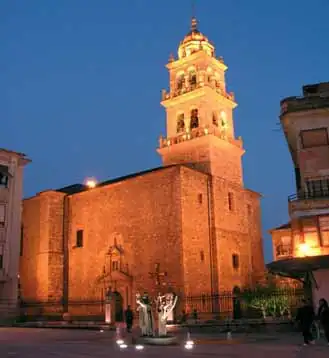 Church of Santa María where the Miracle occurred, Ponferrada
He returned home and hid the tabernacle without his wife's knowledge, but she grew suspicious upon noticing brilliant rays of light emanating from the hidden chest in the dark of night. Panicking, Juan decided to rid himself of the stolen sacred objects once and for all. He took the tabernacle to a field known as El Arenal and hurled it into ancient ruins alongside the sacred Hosts. The discovery of the theft had caused profound grief and consternation throughout the town.
Meanwhile, Juan exhibited extreme agitation, fearful of being caught trying to sell the silver pyx. Adjacent to the Arenal field, landowner Diego Núñez de Losada had established a target-shooting range for festive holiday recreation. Multiple eyewitnesses reported seeing brilliant flashes of celestial light hovering above the ruins at night, while during daylight white doves persistently nested over the spot. Hunters tried repeatedly to shoot the doves, but their arrows and shots missed inexplicably.
A local farmer named Nogaledo approached the ruins to capture the doves. Entering the crumbling walls, he discovered the open tabernacle and the sacred Hosts, which radiated an intense, dazzling light. Deeply moved, he ran to the parish church and rang the bells, alerting the entire village. Within minutes, a grand procession formed to return the sacred Hosts to the church. Overcome with guilt, Juan confessed his crime. A memorial chapel was erected on the site of discovery, and in 1570 the parish instituted an annual solemn procession on the octave of Corpus Christi.
S. J. de las Abadesas, 1251
In 1251, a magnificent wooden sculpture depicting the Descent from the Cross was carved for the Abbey of Sant Joan de les Abadesses. This masterpiece portrays Jesus, His Blessed Mother, Joseph of Arimathea, Nicodemus, Saint John the Beloved Disciple, and the two thieves. These expressive statues miraculously escaped destruction during the Spanish Civil War of 1936. Their profound expressiveness evokes deep spiritual emotion, particularly the majestic, sorrowful face of Christ.
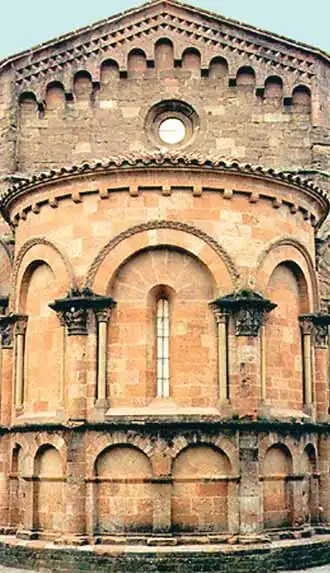 Monastery of Sant Joan de les Abadesses
When the sculpture was completed in 1251, the artist carved a small circular cavity measuring six centimeters in diameter into the forehead of the figure of Christ to enshrine a consecrated Eucharistic Host. Over the centuries, however, the presence of the sacred Host was entirely forgotten by the community. Only in 1426, during restoration work on the statue, was this cavity discovered, sealed with a silver plaque. Inside, wrapped in a white linen cloth, lay the consecrated Host from 1251, completely intact, fresh, and incorrupt. Since that discovery, the Host—known as the “Most Holy Mystery of Sant Joan de les Abadesses”—has been venerated by generations of pilgrims.
Silla, 1907
To this day, pilgrims can venerate the incorrupt Hosts preserved in the parish church of Silla, situated on the outskirts of Valencia. It was on March 25, 1907, the Solemnity of the Annunciation, when Father Fernando Gómez, pastor of Nuestra Señora de los Ángeles in Silla, went to open the tabernacle during Holy Mass to extract the silver ciborium, only to discover with horror that it had been stolen.
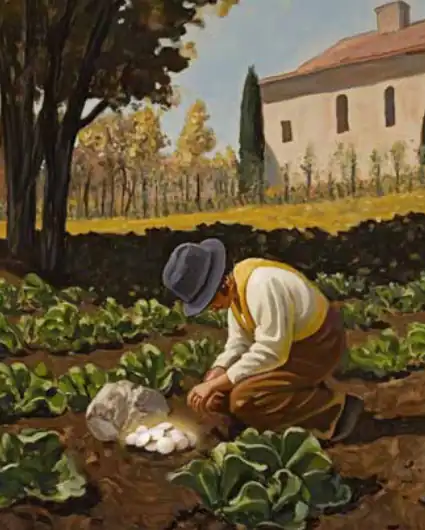
The sacred Particles were recovered two days later beneath a large stone in a small vegetable plot outside the town. A solemn procession was organized to return them to the church, the reliquary was sealed with wax, and a detailed canonical report was drawn up. Unfortunately, two years later the archiepiscopal palace was burned down by anarchist-communist rioters, destroying the original documents. In 1934, verifying that the Hosts remained in the exact pristine state in which they had been recovered beneath the stone, maintaining their original composition without any decay, the Archbishop of Valencia formally recognized the miraculous preservation of the Hosts. In 1982, Archbishop Miguel Roca reconfirmed the canonical cult of the Holy Hosts of the Miracle.
Valencia
The Holy Grail of Valencia is the sacred chalice that Jesus Christ used at the Last Supper with His Apostles to consecrate and offer the Eucharistic Wine—His very Blood—and is historically identified with the cup used by Saint Joseph of Arimathea to collect the Precious Blood from the pierced side of the Crucified Christ. Variations of the name include San Grëal, Holy Grail, and Sangreal in English, Sanct Graal in French, and Gral in German.
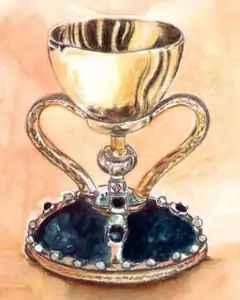 The Holy Chalice of Valencia
The term is lexically related to the Latin gradalis or gratalis, signifying a precious vessel. Numerous ancient historical sources record that centuries after the death of Christ, the Holy Grail was exposed for the veneration of pilgrims arriving in Jerusalem. According to Bishop Arculf, a French bishop who visited the Holy Land around 670–720, the Chalice of the Lord was preserved in the Church of the Holy Sepulchre in Jerusalem. The Venerable Bede adds that the sacred cup was protected by a net through which pilgrims could reverently touch and kiss it.
It was likely taken from Jerusalem in the seventh century during the Persian or Arab invasions. Today, inside the Gothic Chapel of the Holy Chalice in Valencia Cathedral, this venerated chalice is preserved for public adoration. The vessel consists of an upper cup of Oriental sardonyx carnelian dating from the first century BC, mounted on a medieval foot and stem fashioned with gold, pearls, and precious gems. An ancient kufic inscription appears at the base. As Professor Salvador Antuñano observes:
When one truly understands the mystery of the Holy Grail, one realizes there is nothing esoteric or enigmatic about it: this precious Chalice bears witness to the most sublime and dramatic event in human history—the mystery of the Word made Flesh and given as the Holy Eucharist.
Zaragoza, 1427
This Eucharistic Miracle took place in the city of Zaragoza in 1427, during the episcopate of Bishop Alonso de Argüello. Don Dorner, archdeacon of the city, authored a detailed contemporary account preserved in the municipal archives:
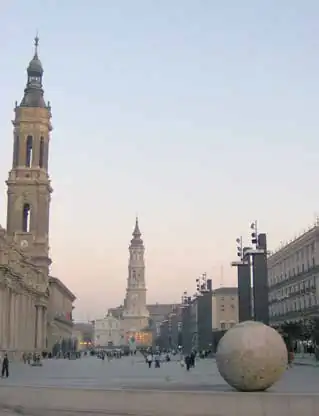 Cathedral of Zaragoza
A married woman in Zaragoza consulted an impious Moorish sorcerer in hopes of obtaining a potion to tame the harsh, violent temper of her husband. The sorcerer instructed her that to change her husband's temperament, she must procure a consecrated Host. The superstitious woman went to the Church of San Miguel, received Communion, and sacrilegiously removed the Host from her mouth, hiding It in a small wooden casket. She brought the casket to the sorcerer's house. When they opened it, they were terrified to see, in place of the Host, a luminous Infant of radiant beauty. The frightened sorcerer ordered the woman to take the casket and burn the child to ashes, returning the ashes to him. Without scruple, she followed his command.
To her utter astonishment, when the wooden box was reduced entirely to cinders, the holy Child remained completely uninjured and untouched by the flames. Overcome with terror, she ran back to the sorcerer, who began trembling violently, dreading the vengeance of Heaven. Together, they went straight to the Cathedral to confess everything to Bishop Alonso, with the sorcerer requesting Holy Baptism. After consulting theologians, the Bishop organized a solemn procession to translate the Miraculous Infant from the woman's home to the Cathedral. The entire city poured into the streets in tears of emotion.
The Miraculous Child was placed on the altar of the Chapel of San Valero for the veneration of the people. The following morning, as the Bishop celebrated Holy Mass at that altar, another prodigy occurred: as the words of consecration were pronounced, the Infant transformed back into the sacramental appearance of the Host, which was devoutly consumed by the prelate. Through this Miracle, the city of Zaragoza experienced a profound spiritual reawakening of Eucharistic devotion.
This historical narrative is preserved to this day in the archives of the Municipality of Zaragoza.
Source
Text and photographs: International Exhibition «The Eucharistic Miracles of the World», designed and created by Saint Carlo Acutis. Original documentation at miracolieucaristici.org.