
Krakow, 1345
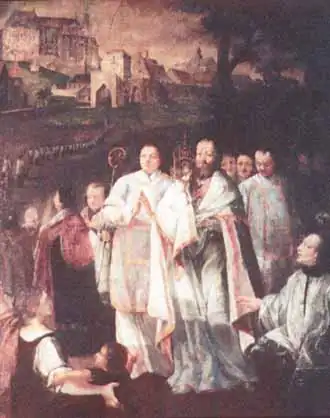
In the year 1345, King Casimir III the Great of Poland ordered the construction of the Church of Corpus Domini in honor of an extraordinary Eucharistic miracle that took place that same year in the fields of Wawel near Krakow. Thieves had broken into a church outside Krakow. Having forced open the tabernacle, they stole the pyx containing consecrated Hosts. Discovering shortly afterward that the pyx was not made of pure gold, they cast it into a muddy, refuse-strewn marsh. Immediately, a dazzling light burst forth from the swamp.
 Interior of the Church of Corpus Domini, Krakow Church of Corpus Domini, Krakow
These brilliant beams of celestial light shone day and night for several days. The entire population noticed the remarkable phenomenon and informed the Bishop of Krakow. The prelate learned that radiant rays were shooting skyward from the marsh, visible from miles away. Unable to explain how such a phenomenon could occur naturally, the bishop proclaimed three days of strict fasting and prayer. On the third day, the entire town walked in solemn procession, headed by the bishop, to the edge of the luminous marsh.
A careful search was initiated through the mud, until a man finally recovered the pyx with the consecrated Hosts completely intact, spotless, and dry. Beholding the radiant light emanating from them, the crowd wept with joy and broke into songs of praise and thanksgiving to God. To this day, on the solemnity of Corpus Christi, the miracle is solemnly commemorated in the Church of Corpus Domini in Krakow.
Glotowo, 1290
In 1290, during a devastating invasion of pagan Lithuanians, a priest from the village of Glotowo concealed a consecrated Host in a field near the church. None of the local survivors knew the secret location where the Host had been hidden. Many years later, while plowing the soil in spring, a local peasant discovered it through the extraordinary behavior of his oxen, which knelt down in the furrow to adore the sacred Host, from which a dazzling light was shining.
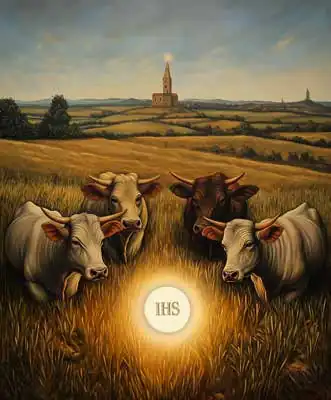
Eucharistic Sanctuary of Glotowo. Pyx containing the relic of the miraculous Host; relief depicting the oxen bowing before the Host. The oldest chronicles recount that the oxen were pulling the heavy plow, guided at a steady pace by the farmer. As the sun mounted high in the sky, the farmer dug into the furrow and found that the celestial light was emanating from an earth-stained pyx containing a consecrated Host that remained completely intact and white as snow. Consecrated by Bishop Krzysztof Potocki on July 24, 1726.
Today, the sanctuary of Glotowo continues to attract thousands of pilgrims annually who venerate the relic of the intact Host. The ancient account describes how the exhausted beasts were laboring up a hill after a long day's work. Suddenly the plow caught on a buried object, and the oxen pulled harder until a large clod of earth broke free. Then the animals halted, rooted to the spot as though petrified.
At first, the peasant grew impatient with his team, but paused in amazement upon sensing a sudden change in the atmosphere. The field became illuminated as bright as midday, and an intense light radiated from the furrow, enveloping the oxen who were kneeling in adoration. The peasant quickly ran to inform the townspeople, who hastened to the spot. Local authorities organized a solemn procession to transfer the sacred Host to the church in Dobre Miasto.
According to ancient chronicles, the Host subsequently disappeared from Dobre Miasto and was found once again in the very field where it had been unearthed. This was recognized as an unmistakable sign of divine will, and a sanctuary dedicated to Corpus Christi was erected upon the exact site. Glotowo's renown grew over the centuries, culminating in the expansion and consecration of the great Baroque sanctuary in the eighteenth century.
Legnica, 2013
On December 25, 2013, in the Church of Saint Hyacinth in Legnica, during the celebration of the Holy Eucharist, at the moment of Communion, a consecrated Host inadvertently fell to the stone floor. Following liturgical norms, It was immediately picked up and placed into a small vessel of water (a sacrarium vessel) to dissolve.
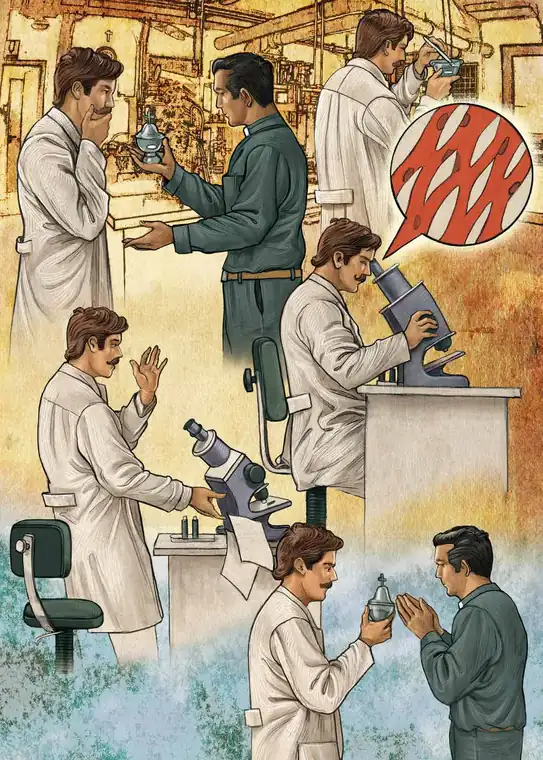
The pastor of Saint Hyacinth, Father Andrzej Ziombra, recounts that on January 4, accompanied by other priests, he went to check whether the consecrated Host had dissolved after nearly two weeks: «We saw immediately that the Host had not dissolved, and that a red, blood-like stain had appeared over approximately one-fifth of its surface. We decided to inform the Bishop of what had transpired, and he immediately instituted a formal theological and scientific commission to investigate the phenomenon.
Meanwhile, we noticed that the stain was changing color over the following days, shifting from intense bright red to brownish-red (...). The sample from the Host was taken directly by forensic scientists on January 26, 2014. For us priests, the miracle was evident; nevertheless, the commission had to verify whether this was caused by some form of red bacteria, fungus, mold, or external contaminant (...).
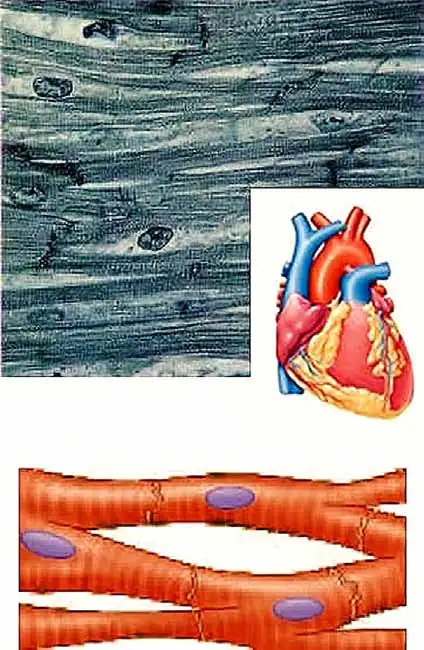
The Institute of Forensic Medicine in Wrocław immediately excluded the presence of bacteria or fungi that produce red pigments after the first round of analysis. A secondary histopathological examination revealed that several tissue fragments closely resembled striated myocardial (heart) tissue. We subsequently decided to seek an independent second opinion, bringing identical samples to the Institute of Forensic Medicine in Szczecin without disclosing their origin. There, an entirely distinct methodology of investigative analysis was employed.
Following extensive tests, the Department of Histopathology at the Pomeranian Medical University in Szczecin issued an official communique stating that «in the histopathological image, it was found that the tissue fragments contain fragmented parts of cross-striated muscle fibers». Furthermore, this «closely resembles human myocardial muscle, exhibiting alterations that typically present during intense agony». While the blood found on the Host was not fully typed, it was established that human DNA was undeniably present».
The results of these exhaustive analyses were presented to the Holy See, specifically to the Congregation for the Doctrine of the Faith, which officially recognized the supernatural nature of the event. It is striking that the scientific findings correspond closely with those of the historic Eucharistic Miracle of Lanciano (c. 750 AD), as well as recent contemporary Eucharistic miracles, such as Sokółka (Poland, 2008), Tixtla (Mexico, 2006), and Buenos Aires (Argentina, 1996).
On April 17, 2016, Monsignor Zbigniew Kiernikowski, Bishop of Legnica, announced during Holy Mass that, in accordance with the directives of the Holy See, he had instructed the parish vicar Father Andrzej Ziombra «to prepare an appropriate place for the public exposition of this precious Relic, so that the faithful may express their personal adoration in a fitting manner».
It is profoundly symbolic that this Miracle took place in a church dedicated to Saint Hyacinth (1185–1257), the great Dominican apostle deeply devoted to the Eucharist, who was himself the protagonist of a Eucharistic prodigy. When invading Mongol hordes arrived at the gates of Kiev, Saint Hyacinth seized the ciborium containing the consecrated Hosts from the altar and ran toward the church exit to save them from desecration.
Reaching the rear of the sanctuary, he heard a voice calling him by name from an alabaster statue of the Blessed Virgin near the altar: «Hyacinth, Hyacinth! I see that you are saving my Son, but will you leave His Mother to be profaned in the hands of the barbarians?». The Saint excused himself, saying that it was impossible for a single man to lift so heavy a stone statue; but the Virgin replied: «If you had a little more faith and a little more love for me, you would find it easy to carry this weight». Hyacinth replied: «My only desire is to love you and trust in you».
Suddenly, the heavy statue became light as a feather, and Saint Hyacinth, accompanied by his friars, was able to cross the mighty Dnieper river miraculously dry-shod and pass unnoticed amidst the fierce Mongol warriors. On January 5, 2014, when priests noticed the red stain on the Host in the water, Bishop Stefan Cichy immediately instituted the scientific inquiry. Professor Barbara Engel, a cardiologist who participated in the research, declared at the press conference: «The material was analyzed under UV rays with an orange filter, yielding unequivocal results: myocardial fibers were identified, typical of living heart tissue, bearing changes characteristic of severe agony».
Poznan, 1399
In 1399, in the city of Poznan, Poland, a group hostile to the Catholic faith bribed a domestic servant to steal three consecrated Hosts from the Dominican church (today the Jesuit church). Enticed by a substantial monetary reward, the servant stole the Hosts. Handing them over to the conspirators, they descended into the cellar of a private house, laid the Hosts upon a wooden table, and began desecrating them by striking them with an awl.
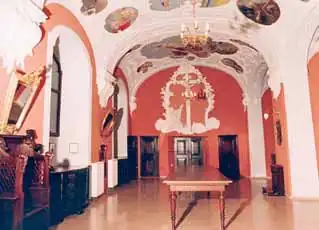
Suddenly, living Blood gushed copiously from the punctured Hosts, splashing onto the face of a blind girl present in the cellar, who was instantaneously cured of her blindness. Seized with terror and panic, the desecrators attempted desperately to destroy the Hosts, but the particles remained completely indestructible. In panic, they carried them outside the city walls and hurled them into the marshes bordering the Warta River. Meanwhile, a young shepherd tending his flock nearby saw three luminous Hosts hovering in mid-air above the marsh.
Overcome with awe, he returned home to notify his father and civil authorities. The mayor dismissed the boy's story as an absurd fantasy and had the youth imprisoned. Mysteriously freed from his cell, the young shepherd presented himself once more before the mayor, who, finally convinced of the boy's sincerity, proceeded to the site. By then, an enormous crowd had gathered around the three glowing Hosts suspended in the air.
Only Bishop Wojciech Jastrzębiec, following fervent public prayers and supplications to Heaven, was able to retrieve the miraculous Hosts, which descended gently into the pyx held in his hands. The bishop immediately ordered a solemn procession to transfer the miraculous Hosts to the Church of Saint Mary Magdalene. A wooden votive chapel was erected on the site of the miracle, quickly becoming a major pilgrimage sanctuary. Later, King Władysław II Jagiełło, having learned of the prodigy, made a personal pilgrimage to Poznan to venerate the Hosts.
As an act of thanksgiving, King Jagiełło founded the Gothic Church of Corpus Domini directly on the site where the Hosts had hovered. In the nineteenth century, a sanctuary was built over the cellar where the desecration occurred; the wooden table bearing the bloodstains from the Hosts is preserved there to this day. Every Thursday, a solemn Eucharistic procession in honor of the miracle is celebrated at Corpus Domini Church in Poznan.
Sokółka, 2008
The university professors at the Medical University of Białystok (UMB) emphasized that, in the sample from the Host examined, numerous biomorphological indicators typical of myocardial heart tissue were identified—such as the phenomenon of segmentation (damage to heart muscle fibers at the intercalated discs, the structures connecting heart muscle cells) and fragmentation. These microscopic injuries are visible under high magnification as numerous minute lesions.
 SOKÓŁKA POLAND, OCTOBER 12, 2008
These distinctive morphological alterations can only be observed in living, non-necrotic fibers, and exhibit clear signs of rapid myocardial spasms characteristic of the extreme agony preceding death. Further decisive evidence confirming that the sample is human cardiac muscle tissue is the central positioning of the cell nucleus within the observed fibers—a hallmark characteristic of heart muscle tissue... “Along several fiber segments, signs corresponding to contraction bands were observed.
Furthermore, during electron microscopy examination, the profiles of intercalated discs and delicate myofibril filaments were clearly visible,” declared the two prominent scientists from Białystok. Moreover, the heart tissue was intimately and inextricably intertwined with the consecrated Host. The official forensic report by Professor Maria Sobaniec-Łotowska and Professor Stanisław Sulkowski states:
The material provided was entirely sufficient for forensic evaluation; it demonstrates that we are dealing with human myocardial muscle tissue, or at least the closest analogue among all living tissues of an organism.
“And what is exceptionally important, the analyzed sample consists entirely of human heart muscle tissue.” This finding was incorporated into the official Communiqué of the Metropolitan Curia of Białystok on October 14, 2009. The specialists discovered further inexplicable elements: “The Host remained submerged in water for an extended period, and on the corporal for even longer. Under ordinary conditions, the tissue should have undergone autolysis—self-destruction through the action of intracellular enzymes; yet in the analyzed material, no trace of autolytic destruction was detected!” declared the two professors.
Another remarkable observation is that the red substance on the corporal, although slightly dried after removal from water, underwent no change in appearance over more than two years, despite being preserved without artificial temperature control or chemical stabilizers. “This proves that if the phenomenon were caused by a bacterium, the material would have decayed, despoiled, and completely altered. Any microbial culture, even the purest, changes totally within a single week,” added Dr. Sulkowski. A few critics who had never seen nor tested the sample suggested that the red coloration was prodigiosin, a pigment produced by Serratia marcescens.
“That is completely absurd,” affirmed the Białystok specialists, “not least because the analyzed sample is unmistakably living human heart muscle, not a bacterial colony.” The scientists conducted their examinations strictly on empirical scientific grounds. Other accusations were even more baseless, such as rationalist claims that the tissue came from a murdered human body. The professors issued a public statement expressing
profound indignation that public opinion should be misled by false, pseudoscientific hypotheses concerning the investigated phenomenon, especially by persons ignorant of the analytical details, who had no access to the material or documentation, and who are often unfamiliar with the applied diagnostic techniques.
Drafting the scientific protocol took two weeks. When informed of the results, the Archbishop of Białystok convoked a special Ecclesiastical Commission on March 30, 2009, tasked with evaluating the theological implications, interrogating witnesses, and ruling out fraud. The commission determined that no external human substitution took place:
The Host from which the sample was extracted for forensic examination is identical to the one transferred from the sacristy to the tabernacle of the chapel. No intervention by unauthorized persons occurred.
This was confirmed by the scientists: it was physically impossible for anyone to have inserted a piece of human muscle into the Host, because the bread fibers and the myocardial tissue fibers were intimately intertwined and fused at the microscopic level, as though bread had organically transformed into living flesh. “Even NASA scientists with the most advanced biotechnology could not artificially fabricate such an interpenetration,” stated Dr. Sobaniec-Łotowska. Catholic doctrine teaches that through the words of consecration, by the power of the Holy Spirit, bread becomes the Body of Christ and wine His Blood, summoning all ministers and faithful to reverent faith in the Blessed Sacrament.
Source
Text and photographs: international exhibition «The Eucharistic Miracles of the World», by Saint Carlo Acutis. Original panel at miracolieucaristici.org.