
Alkmaar, 1429
In 1429, in the Cathedral of Saint Lawrence in the city of Alkmaar, a newly ordained priest named Father Folkert was celebrating his first Holy Mass. Following the consecration, he accidentally spilled the consecrated wine onto the altar and his chasuble. Miraculously, the consecrated wine immediately transformed into visible Blood. All human efforts to wash out the bloodstains proved completely futile. The precious relic of the bloodstained chasuble is preserved to this day in the Cathedral of Saint Lawrence in Alkmaar.
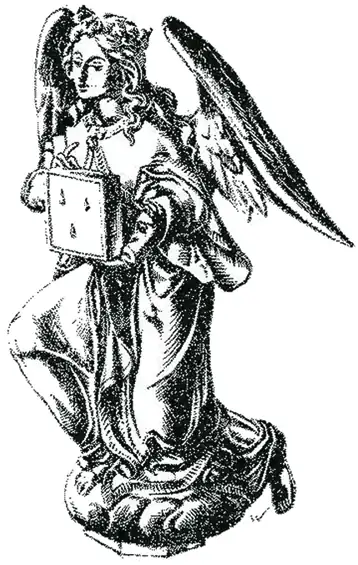
A magnificent angel-shaped silver reliquary containing the bloodstained chasuble is enshrined in the cathedral. Father Folkert celebrated his first Mass in the presence of his pastor, Father Volpert Schult. Moments after pronouncing the words of consecration over the chalice, Father Folkert accidentally tipped it, and the consecrated species transformed into living human Blood upon contact with the vestment.
Overcome with fear after Mass, the priest cut out the bloodstained portion of the fabric and burned it in the fireplace; he then carefully patched the hole. As soon as he completed mending the vestment, fresh Blood instantly seeped through the new fabric, reforming the exact stain. The two priests traveled to Utrecht to present the chasuble to their bishop. In 1433, following thorough canonical inquests, the Bishop of Utrecht officially approved public veneration of the miracle.
Amsterdam, 1345
On March 12, 1345, shortly before Easter, a devout citizen named Ysbrand Dommer fell gravely ill and summoned a priest to receive the Last Rites. After receiving Holy Communion, a violent coughing spell caused him to regurgitate into a domestic basin, whose contents were immediately thrown into the fireplace. The following morning, Ysbrand was completely and inexplicably cured. A maidservant approaching the fireplace to rekindle the flames noticed an extraordinary light radiating from the embers: resting untouched above the flames was the Sacred Host.
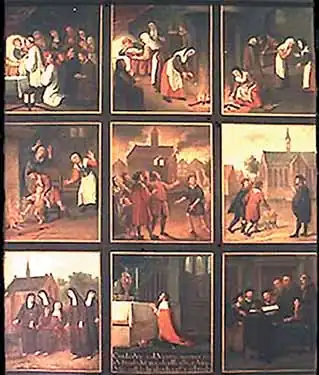 Depiction of the Prodigy
The servant's cries alerted the household and neighbors, who gathered in awe to verify the miracle. Ysbrand wrapped the immaculate Host in a clean linen cloth, placed it in a wooden chest, and sent for the parish priest. The priest retrieved the Host and took it to the parish church; however, on three successive occasions, the Sacred Host mysteriously disappeared from the church tabernacle and was found back in Ysbrand's domestic chest. Recognizing the divine will, authorities converted his home into a public chapel (*Heilige Stede*).
On Easter Sunday, civic magistrates and eyewitnesses drafted a formal notarized report of the event. Bishop Jan van Arkel of Utrecht examined the documentation and officially authorized the cultus. In 1452, a disastrous fire destroyed the chapel, yet the monstrance containing the miraculous Host emerged from the raging inferno completely unscathed. Although the original reliquary was stolen during religious upheavals in the seventeenth century, perpetual adoration has been maintained in Amsterdam down through the centuries in commemoration of the miracle.
To this day, every year on the eve of Palm Sunday, tens of thousands of pilgrims participate in the famed *Stille Omgang* (Silent Procession), walking in nocturnal silence through the historic streets of Amsterdam in honor of the Eucharistic prodigy.
Bergen, 1421
The historic city of Bergen op Zoom is celebrated not only for its picturesque canals along the banks of the Scheldt River, but also for an extraordinary Eucharistic Miracle that took place in 1421. For several months, the pastor of the Church of Saints Peter and Paul had been tormented by growing skepticism regarding the Real Presence of the Body and Blood of Christ in the consecrated Host and the dogma of transubstantiation. Consequently, he showed complete indifference and a total lack of devotion toward the Blessed Sacrament.

In 1421, on the Sunday preceding the Solemnity of Pentecost, after concluding the celebration of Holy Mass, the priest took the remaining consecrated Particles from the altar, carried them outside, and sacrilegiously hurled them into the flowing waters of the river Scheldt. Several months later, local fishermen were stunned to find the consecrated Hosts floating peacefully upon the surface of the water, completely intact, fresh, and covered with coagulated living Blood.
News of the discovery of the miraculous Hosts spread rapidly throughout the region, attracting multitudes of faithful and pilgrims from across the Low Countries. The local Bishop conducted an inquiry and formally approved the public cult and veneration. Although the Protestant Reformation subsequently banned public Catholic processions and exterior expressions of worship for an extended historical period, Catholic believers quietly and faithfully preserved the living memory of the Miracle. During the twentieth century, there was a dramatic revival of the cult, spearheaded by historical research and renewed civic devotion, and today numerous popular initiatives, devotions, and solemn annual processions commemorate the Eucharistic Prodigy of Bergen op Zoom.
Boxmeer, 1400
The Eucharistic Miracle of Boxmeer occurred in the Church of Saints Peter and Paul in the year 1400. Father Arnoldus Groen was celebrating Holy Mass. Immediately following the consecration, he was overcome by sharp doubts concerning whether Christ was truly present under the forms of bread and wine. Suddenly, the consecrated species in the chalice began to boil with violent intensity, bubbling over the rim and spilling onto the linen corporal. The wine had transformed into visible Blood, which quickly coagulated into a large clot of living flesh.
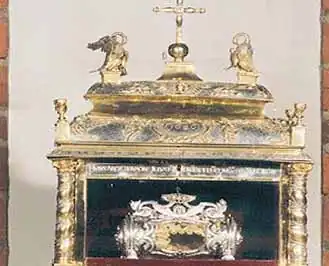 Interior of the church
The precious relics of the bloodstained corporal and coagulated Blood have been reverently preserved in Boxmeer to this day. The annual feast of the miracle is celebrated with an elaborate, solemn Eucharistic procession (*Vaart*). Numerous historical records, marble inscriptions, and classical paintings document the miracle. Successive popes, including Clement XI, Benedict XIV, Pius IX, and Leo XIII, granted special indulgences in honor of this prodigy.
Boxtel-Hoogstraten, 1380
In 1380, Father Eligius van der Aker was celebrating Holy Mass in the Church of Saint Peter in Boxtel. Shortly after the consecration, he accidentally spilled the consecrated wine onto the corporal and the altar cloth. Because white wine had been used for the liturgy, the instantaneous transformation into bright red living Blood was vividly apparent to all present. Distressed, the priest rushed to the sacristy after Mass and attempted repeatedly to wash out the stains, but water had no effect on the Blood. Ashamed, he locked the stained cloths inside a chest beneath his bed, revealing the secret only on his deathbed.
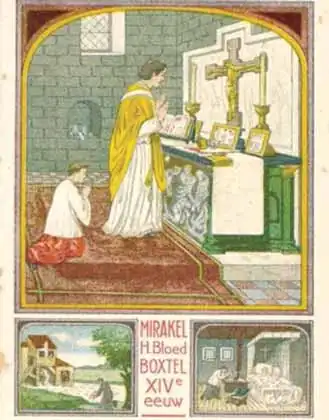 Relic carried in procession
His confessor, Father Hendrik van Meerheim, notified Cardinal Pileus de Prata, papal legate of Pope Urban VI. Following a rigorous canonical investigation, the Cardinal approved public veneration by official decree on July 25, 1380. In 1652, the sacred relics were moved across the border to Hoogstraten in modern-day Belgium to shield them from destruction during religious conflicts.
In 1924, following persistent petitions from Dutch Catholics, the bloodstained corporal was joyfully restored to the town of Boxtel. Every year on the feast of the Most Holy Trinity, the citizens of Boxtel celebrate the *Heilig Bloedprocessie* (Procession of the Holy Blood), carrying the relic through the decorated streets for public veneration.
Breda-Niervaart, 1300
The Eucharistic Miracle of Breda-Niervaart took place on June 24, 1300. At that time, historical chronicles recount various conflicts and invasions. One of the most authoritative documents describing the events in detail is the formal ecclesiastical investigation commissioned by the Bishop of Liège.
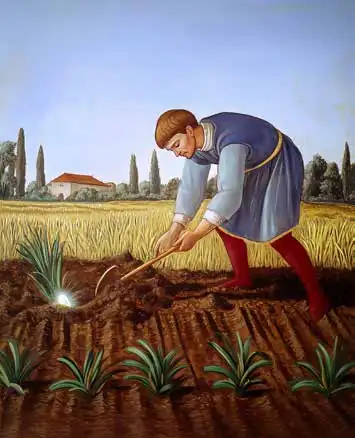
On June 24, 1300, a farmer named Jan Bautoen was plowing his fields near the village of Niervaart when he uncovered, buried beneath a heavy clod of earth, a consecrated Host completely intact and uncorrupted. Having reverently delivered It to the parish priest of Niervaart, the Host was placed in the church, where the sacramental species remained miraculously preserved without decay. News of the prodigy spread rapidly and vast crowds gathered to venerate the Host.
With time, the sacred Particle was solemnly transferred to the Collegiate Church of Our Lady in Breda, where It was enshrined in an elaborately crafted monstrance. Regrettably, amidst religious wars and turmoil, physical trace of the miraculous Host was lost. Nevertheless, the faithful have kept devotion to this Eucharistic Prodigy alive: in the twentieth century the cult was vigorously revived through a Confraternity in Breda dedicated to the Blessed Sacrament. To this day, each year during the Solemnity of Corpus Christi, public prayers and solemn processions are held in honor of the Miracle.
Meerssen, 1222-1465
The ancient sanctuary of Meerssen in Limburg, originally patronized by Queen Gerberga of Saxony in the tenth century, was the site of two celebrated Eucharistic prodigies. In 1222, during the celebration of Sunday Mass, the priest broke the large Host after the consecration, and drops of living Blood began dripping copiously from the fractured Particle, soaking the corporal before the eyes of the congregation.
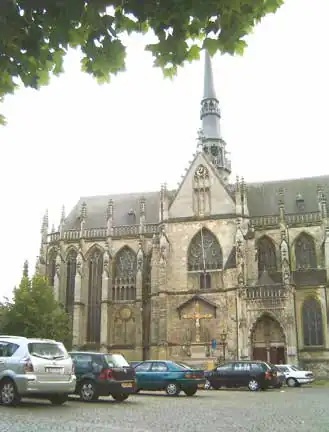 Basilica of the Blessed Sacrament, Meerssen
In 1465, a catastrophic fire swept through the town, engulfing and destroying the gothic church. A local farmer courageously rushed into the burning sanctuary and rescued the relic of the bloodstained Host from the blazing altar; it was found completely untouched by smoke or flame. This second event is commemorated as the "Miracle of the Fire." The church was rebuilt, and in 1938 Pope Pius XI elevated the sanctuary to the dignity of a Minor Basilica. It remains a major pilgrimage destination, and the sacred relic is carried in solemn procession annually during the octave of Corpus Christi.
Stiphout, 1342
In 1342, a ferocious thunderstorm struck the village of Stiphout in Brabant. A bolt of lightning struck the parish church of Saint Trudo, instantly setting the wooden roof ablaze. As the flames raged furiously and swept into the church nave, the aged pastor, Father Jan Hocaerts, called upon the villagers for assistance. A courageous young man named Jan Baloys offered to rescue the Blessed Sacrament from the inferno.
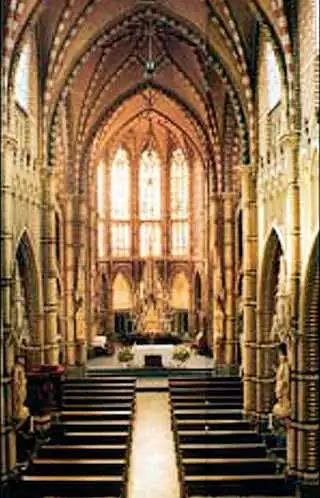 Interior of the Church of Saint Trudo
Scaling the exterior wall, Jan Baloys broke through a window near the high altar and leaped inside. To his amazement, while the entire church was being consumed by roaring flames, the fire stopped completely at the boundary of the sanctuary, leaving the tabernacle and altar entirely unharmed. Jan retrieved the pyx filled with consecrated Hosts and carried it safely through the smoke. The Hosts were found in perfect preservation, and the incident was universally acclaimed as a Eucharistic miracle. The church was rebuilt, and the preserved Hosts remained intact for over two centuries, commemorated each year during the feast of Corpus Christi.
Source
Text and photographs: international exhibition «The Eucharistic Miracles of the World», by Saint Carlo Acutis. Original panel at miracolieucaristici.org.