
Avignone, 1433
The Eucharistic Miracle of Avignon occurred in the Chapel of the Holy Cross, headquarters of the Confraternity of the Grey Penitents (Pénitents Gris), whose foundation traces back to the era of the pious King Louis VIII of France. The King, in thanksgiving for victory over the Albigensian heretics who denied the Real Presence of Jesus in the Holy Eucharist, organized a solemn act of Eucharistic reparation on September 14, 1226, the liturgical feast of the Exaltation of the Holy Cross.
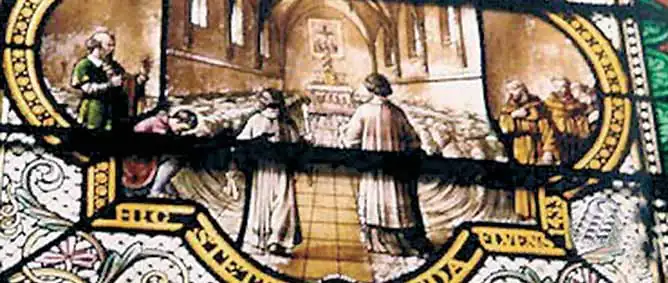 Stained glass window inside the church depicting the Miracle
According to the official account preserved in the archives of the Chapel of the Grey Penitents, on November 30, 1433, while the Blessed Sacrament was exposed upon the altar for public adoration, the city of Avignon was inundated by a catastrophic flood caused by torrential rains that drove the Rhône river far over its banks.
Amidst the general alarm, Armand and Jehan de Pouzilhac-Farure, the chief directors of the Confraternity, rowed a boat through the submerged streets with immense exertion, determined to reach the chapel and rescue the monstrance containing the Blessed Sacrament.
Peering through the iron grille of the entrance, they discovered that floodwaters had risen nearly six feet inside the chapel; yet, to their astonishment, the waters parted miraculously to the right and left of the altar aisle, forming two crystalline walls of water and leaving the central pathway, the altar, and the monstrance completely dry and untouched. News of the Miracle spread rapidly throughout the city, and magistrates, clergy, and hundreds of citizens rushed to the sanctuary, offering songs of praise and thanksgiving to God. Hundreds of eyewitnesses certified the prodigy under oath.
Thereafter, the Confraternity of the Grey Penitents decreed that the anniversary of the Miracle be celebrated annually in the chapel on the Feast of Saint Andrew the Apostle. To this day, each November 30, the members assemble to commemorate the prodigy. Prior to imparting the Eucharistic blessing, the choir chants the Cantemus Domino, the triumphal canticle of Moses after the crossing of the Red Sea:
I will sing to the Lord, for He has triumphed gloriously... At the blast of Your nostrils the waters gathered together, the floods stood up in a heap like a dam... Who is like You, O Lord, among the gods? Who is like You, majestic in holiness, awesome in glorious deeds, doing wonders?... In Your mercy You led the people whom You redeemed.
(Exodus 15:1-11)
Blanot, 1331
The Eucharistic Miracle of Blanot occurred during Easter Sunday Mass in the year 1331, when during the distribution of Holy Communion, a fragment of the Host fell from the priest's hands. In the fourteenth century, Blanot was a small village in central France within the Diocese of Autun. The Bishop of Autun, Pierre Bertrand, ordered an official canonical inquest that same year, conducted by the curial promoter Jean Jarossier, providing us today with a meticulous, sworn record of the events.
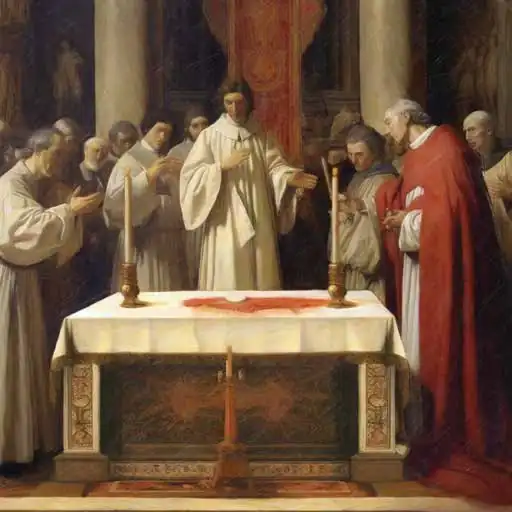
On Easter Day in 1331, Father Hugues de la Baume, vicar of Blanot, celebrated early morning Mass. While administering Communion to Jacquette, widow of Regnaut d'Effour, a particle of the consecrated Host slipped from her mouth and fell upon the communion cloth held before her by two altar servers, one of whom was named Thomas Caillot.
Madame Jacquette did not notice what had occurred; however, Thomas, who held the cloth, saw the fallen particle and alerted the priest as he was returning the ciborium to the altar table: “Reverend Father, look beside you, for the Body of our Lord has slipped from this lady's mouth and fallen upon the cloth.” The celebrant hastened to retrieve the particle, but suddenly, this fragment—amounting to approximately one-fifth of the Host—vanished before their eyes, leaving in its place a distinct drop of fresh, living blood.
Witnessing this prodigy, the vicar immediately brought the communion cloth into the sacristy and attempted to wash the bloodspot with pure water. He repeated the washing multiple times, but the bloodstain only grew darker red and expanded in size. Filled with awe and trembling, the priest asked Thomas Caillot for a knife to cut away the portion of the linen bearing the bloodstain. Showing it to the assembled congregation, he enshrined it reverently in a reliquary, declaring:
Good people, behold here the Most Precious Blood of our Lord Jesus Christ, for having attempted in every way to wash and scrub it, I could by no means remove the stain from the linen.
Every year in the village of Blanot, public honors are rendered to the Relic of the Miracle, especially during the Solemnity of Corpus Christi.
Bordeaux, 1822
The Eucharistic Miracle of Bordeaux is closely linked to the Holy Family Association, founded in 1820 by the Venerable Father Pierre-Bienvenu Noailles. Today, this religious congregation remains vibrant and active across Asia, Africa, Europe, and the Americas. The Prodigy took place twenty months after the community's foundation, in the convent chapel on Rue Mazarin in the parish of Sainte-Eulalie. Jesus visibly appeared within the exposed Host after Abbot Delort, who was substituting that day for Father Noailles, imparted the solemn Eucharistic blessing.
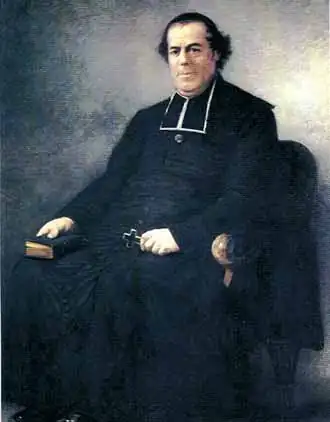 Interior of the chapel of “La Solitude”
Numerous sisters and faithful beheld for more than twenty minutes the luminous figure of Jesus, depicted from the waist up, blessing the assembly through the Host exposed in the monstrance. Several witnesses attested to hearing the Lord speak interiorly: “I am Who am.” The miracle received formal episcopal approval from Archbishop Charles-François d'Aviau du Bois-de-Sanzay of Bordeaux, who personally interrogated the eyewitnesses. The Chapel of the Miracle at Martillac (La Solitude) is visited by pilgrims who venerate the precious monstrance of the Apparition.
Dijon, 1430
In 1430, in the city of Monaco, a woman bought an auction lot containing a monstrance that had undoubtedly been stolen from a church, as it still contained the large consecrated Host used for adoration. Completely ignorant of Catholic doctrine regarding the Real Presence of Christ in the Holy Eucharist, the woman decided to dislodge the Host from the monstrance using a kitchen knife. Suddenly, the Host began to shed living Blood, which dried almost instantly, leaving indelibly imprinted upon the bread the distinct image of Christ seated upon a semicircular throne, flanked by instruments of His Passion.
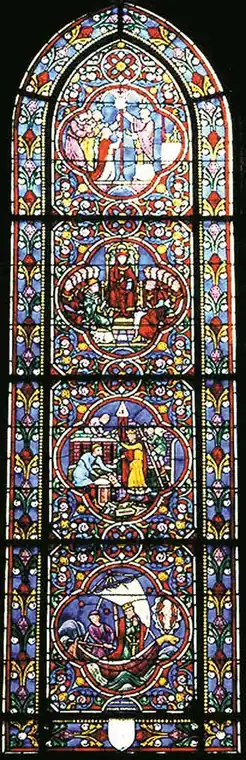 Basilica of Saint Michael, Dijon
Terrified and bewildered, the woman brought the Host to Canon Anelon, who preserved It with reverence. News reached Pope Eugene IV, who presented the miraculous Host to Duke Philip the Good of Burgundy, who in turn gifted It to the city of Dijon. Historical records confirm that in 1794, the miraculous Host was still venerated in the Basilica of Saint-Michel in Dijon. However, on February 9, 1794, during the Reign of Terror of the French Revolution, the municipality confiscated the church, converted it into a temple of the “Goddess of Reason,” and burned the miraculous Host. Numerous ancient chronicles and the stained-glass windows of Dijon Cathedral preserve the memory of the Miracle.
Douai, 1254
Bonum universale de apibus is the title of the celebrated theological work composed by an eyewitness to this Miracle: the Dominican theologian Father Thomas of Cantimpré, Doctor of Divinity and Suffragan Bishop of Cambrai. On Easter Sunday in 1254, in the Collegiate Church of Saint-Amé in Douai, a priest was distributing Holy Communion. As he did so, a consecrated Host accidentally slipped from his fingers. As he leaned down to retrieve It from the pavement, the Host rose by Itself into the air and came to rest upon the purificator.
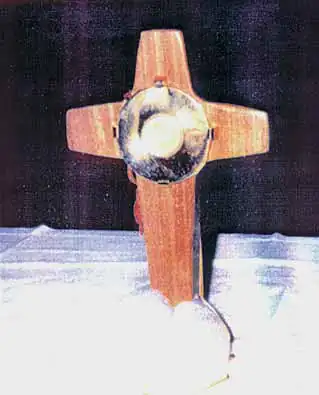 Monstrance with the Relic of the Miraculous Host
Then, in place of the sacramental Host, there appeared the visible form of a radiant, beautiful child, seen by all the faithful and clergy assisting at the liturgy. The news traveled swiftly throughout Flanders. Thomas of Cantimpré traveled immediately to Douai to examine the event in person. He recounts in his own words:
I went directly to the Dean of the church, accompanied by numerous faithful, and asked to view the Miracle. The Dean unlocked the casket where he had enshrined the Host of the Miracle. Gazing upon It, at first I perceived nothing unusual. Yet I was conscious that nothing could prevent me from seeing, like the others, the Sacred Body. I had hardly begun to ponder this when, looking upon It again, I beheld the face of Christ crowned with thorns, with two distinct drops of blood trickling down His forehead. Overwhelmed, I fell to my knees weeping, and began offering fervent thanks to God.
Historical records show that by 1356, an annual feast commemorating the Miracle was celebrated on Wednesday of Easter week. The sacred Host was venerated until the French Revolution, when It was hidden. In October 1854, the pastor of Saint-Pierre in Douai discovered a wooden box hidden beneath the crucifix of the altar of the dead, containing the intact Host and a Latin declaration dated January 5, 1793, written by a canon of Saint-Amé testifying to having rescued the authentic Host of the Miracle from revolutionary profanation.
Faverney, 1608
In the seventeenth century, Protestant and Calvinist doctrines spread rapidly across eastern France, favored by political advantages granted to the nobility, casting doubts upon Catholic dogma even within monasteries. In the town of Faverney, a Benedictine abbey had drifted from strict observance of their founder's rule; nevertheless, the monks maintained fervent devotion to Our Lady the White (Notre-Dame la Blanche), renowned for numerous miracles, including the resuscitation of two unbaptized infants.
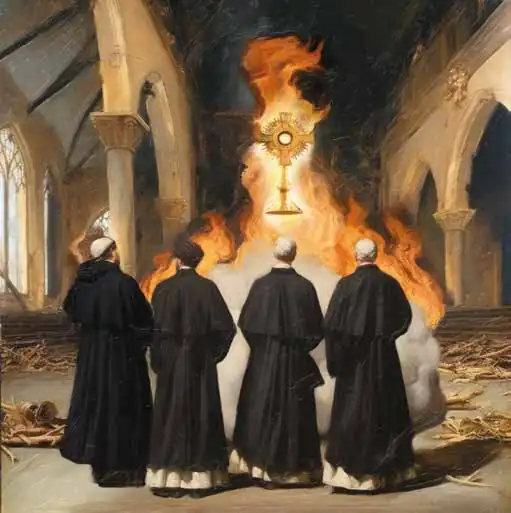
On the eve of Pentecost in 1608, the monks erected a provisional altar for Eucharistic adoration. Because the lunette was wide, they placed two consecrated Hosts within the monstrance. Following Vespers, the monstrance remained exposed upon the provisional wooden altar. On Monday morning, when the sacristan unlocked the church, he found the building filled with choking smoke: the provisional altar had burned entirely to cinders during the night.
Crying aloud, he summoned the monks, who rushed to sift through the hot ashes to locate the sacred vessels. As the smoke cleared, they discovered to their utter amazement that the monstrance was suspended in mid-air, floating thirty-three centimeters above the charred wreckage without any physical support. A multitude of townspeople gathered to gaze upon the prodigy, noting that the two consecrated Hosts inside were completely intact and fresh despite the fire.
Perplexed, the monks summoned the Capuchin friars of Vesoul, who erected a fresh altar beneath the suspended monstrance and celebrated Mass. At the moment of the elevation, the monstrance slowly and gently descended through the air, coming to rest safely upon the new altar corporal. On July 10, 1608, Archbishop Ferdinand de Rye of Besançon officially declared the authenticity of the Eucharistic Miracle. Pope Paul V issued a bull of plenary indulgence, revitalizing the Catholic faith throughout Franche-Comté. In 1862, the Congregation of Rites confirmed its liturgical feast, and in 1908 the tricentenary was celebrated with extraordinary solemnity.
La Rochelle, 1461 / Neuvy Saint Sepulcre, 1257
La Rochelle, 1461: This Eucharistic Miracle consisted in the instantaneous healing of a twelve-year-old boy, Bertrand Leclerc, who had been completely mute and paralyzed since the age of seven. On Easter Sunday in 1461, his mother brought him to Mass in the parish church of Saint-Barthélemy in La Rochelle. At the moment of Communion, Bertrand made eager gestures indicating his burning desire to receive Jesus in the Eucharist.
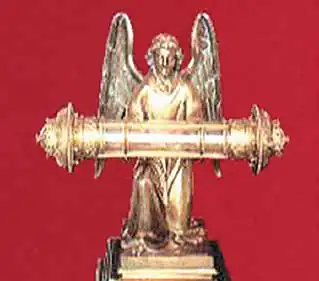
Initially, the priest hesitated to administer the Host because the boy's muteness prevented sacramental confession. However, moved by the child's persistent, weeping entreaties, the priest relented and placed the Host upon his tongue. The moment he swallowed the consecrated Host, Bertrand was instantaneously cured of all paralysis and regained the power of speech, crying aloud: «Adjutorium nostrum in nomine Domini!» (“Our help is in the name of the Lord!”). An illustrated manuscript record preserved in the Cathedral of La Rochelle documents this miracle.
Neuvy-Saint-Sépulchre, 1257: In the collegiate church of Neuvy-Saint-Sépulchre, constructed in the eleventh century on the architectural model of the Holy Sepulchre of Jerusalem, two drops of the Precious Blood of our Lord Jesus Christ collected at Calvary are preserved. The sacred Relic was enshrined in 1257 by Cardinal Eudes de Châteauroux upon his return from the Crusades in the Holy Land. Numerous Roman Pontiffs enriched the shrine with indulgences, fostering profound Eucharistic devotion through the centuries.
Les Ulmes, 1668
On June 2, 1668, the Saturday within the octave of Corpus Christi, the Blessed Sacrament was exposed for public adoration in the parish church of Les Ulmes. The parish priest, Father Nicolas Nezan, was censing the monstrance while intoning the Eucharistic hymn Pange Lingua.
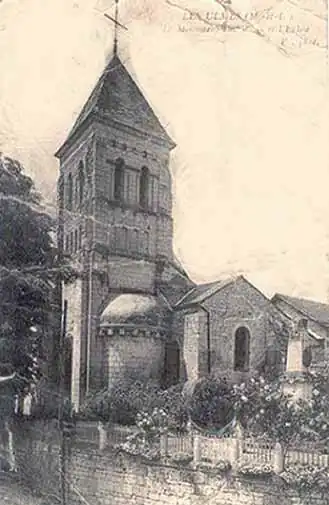
At that exact moment, as the choir reached the stanza “Verbum caro Panem verum,” there visibly appeared in the monstrance, in place of the sacramental Host, the distinct form of a man with shoulder-length chestnut hair, a radiant and luminous countenance, hands folded reverently one over the other, clothed in a brilliant white tunic. This supernatural apparition persisted for over a quarter of an hour, both while the monstrance rested upon the tabernacle and when the priest lowered it to the altar table so that all the faithful present might examine it closely.
On June 13, the pastor transmitted a comprehensive report to his bishop, Henri Arnauld of Angers, who instituted a formal canonical inquiry. On July 25, 1668, Bishop Arnauld issued an official pastoral letter proclaiming the authenticity of the Prodigy. The famous Dominican theologian Father Jean-Baptiste Gonet documented the miracle in Volume VIII of his Clypeus Theologiae Thomisticae (1669). The Bishop commissioned artistic engravings by Edelinck, Bidault, and Ernou to promote devotion. Annual commemorations were observed until the Revolution. In 1793, facing imminent revolutionary desecration, the vicar of Le Puy-Notre-Dame devoutly consumed the miraculous Host. In 1901, the National Eucharistic Congress of Angers held a special session studying the Miracle of Les Ulmes.
Marseille-En-Beauvais, 1533
In 1533, sacrilegious thieves plundered the parish church of Marseille-en-Beauvais, stealing a silver tabernacle containing consecrated Hosts. Intending to dispose of the Hosts, they hurled them into a snowbound field. Despite heavy winter blizzards, several days later a passerby discovered the sacred Particles in pristine condition, miraculously preserved without any decay beneath the snow.
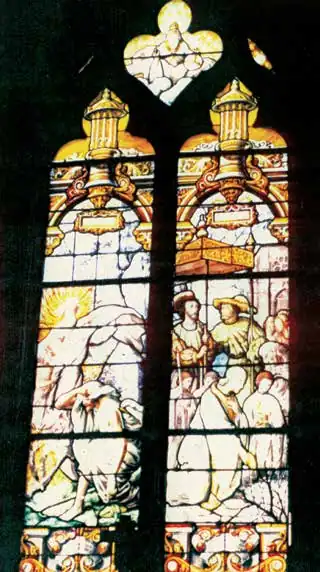
In late December 1532, thieves broke into the parish church and stole the precious silver ciborium, abandoning the consecrated Hosts under a stone in the countryside. On January 1, 1533, a local resident named Jean fretted over his livestock during a severe snowfall. Walking through the fields, his attention was drawn to a large stone that stood completely clear of snow. Lifting it, he discovered to his utter astonishment that the consecrated Hosts beneath it were entirely clean, dry, and uninjured.
He alerted the pastor, Father Prothais, who organized a solemn procession to restore the Holy Hosts to the parish church. A memorial cross was erected on the site of discovery, later replaced by the Chapel of the Holy Hosts (Chapelle des Saintes Hosties) to accommodate the multitudes of pilgrims. The historian Pierre Louvet, in his Histoire et antiquitez du diocèse de Beauvais, records multiple instantaneous miracles that occurred at the shrine, including the healing of Father Jacques Sauvage, who was mute and paralyzed, and of Monsieur d'Autrêche, born blind, who received full sight. In 1561, Bishop-Count Odet de Coligny converted to Calvinism, married Élisabeth de Hauteville, and ordered the miraculous Hosts consumed before renouncing his episcopal see. The Chapel of the Holy Hosts remains a place of prayer to this day.
Paris, 1290
Numerous contemporary archival documents preserve the historical record of the Eucharistic Miracle of Paris in 1290. The Florentine chronicler Giovanni Villani recounts the main facts in Book VII, Chapter 136 of his Nuova Cronica. A thorough modern investigation of all medieval manuscripts was published in 1954 by Madame Moreau-Rendu in her work À Paris, rue des Jardins, prefaced by Monsignor Touzé, Auxiliary Bishop of Paris. Monsignor Jean Rupp also documents the event in his Histoire de l'Église de Paris, during the episcopate of Simon Matifas de Bucy (Bishop of Paris from 1290 to 1304).
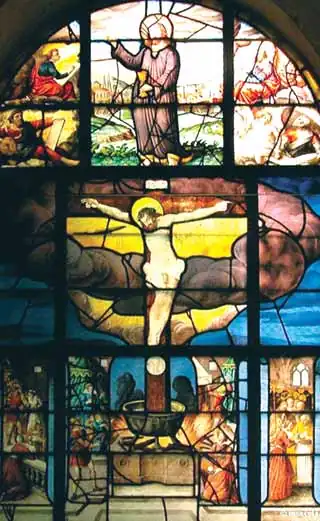 Demolition of Saint-Jean-en-Grève. Pierre-Antoine Demachy (1797)
On Easter Sunday, April 2, 1290, a man named Jonathas, harboring fierce animosity against the Catholic faith and denying the Real Presence of Christ, procured a consecrated Host from a poor woman in exchange for pledged goods. Taking the sacred Particle into his home, he laid It upon a table and repeatedly stabbed It with a penknife; immediately, living Blood gushed forth in abundance, overflowing the basin where the Host lay. Terrified, Jonathas threw the Host into a blazing fireplace, but It hovered unharmed above the glowing coals. In a frenzy, he plunged It into a cauldron of boiling water; the Host hovered above the steam and transformed visibly into the likeness of a Crucifix. Finally, It gently descended into the pitcher of a devout parishioner of Saint-Jean-en-Grève, who carried It reverently to her pastor. For centuries, the Host was venerated in a precious reliquary in Saint-Jean-en-Grève until disappearing during the French Revolution.
King Philip IV the Fair confiscated Jonathas' house, which was designated “The House of Miracles” in a deed of sale from 1291. Pope Boniface VIII authorized the transformation of the site into an expiatory oratory, known as the Church of the Billettes. The street itself was renamed by the people of Paris as Rue du Dieu-Bouilli (“Street of the Boiled God”). An Office of Reparation was celebrated annually on the second Sunday of Advent and during Lent in memory of the Miracle.
Pressac, 1643
The Miracle occurred on Holy Thursday in 1643. Following the Mass of the Lord's Supper, after all the villagers had received Holy Communion, the faithful dispersed. The celebrating priest placed the chalice containing the consecrated Host into the tabernacle near the altar of the Blessed Virgin. The tabernacle rested on four wooden supports surrounding a marble slab covered with a corporal, backed by a painted Eucharistic scene. The chalice was veiled and illuminated by two burning candles placed before the tabernacle.
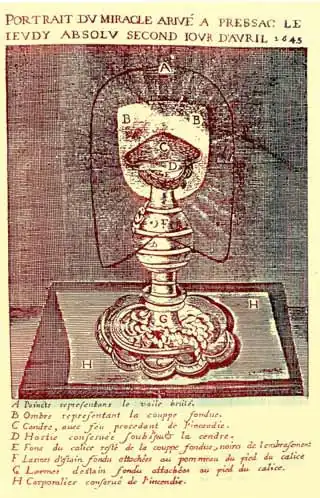
At midday, the sacristan locked the church doors. Two hours later, neighbors noticed thick black smoke pouring from the church windows: open casements had fanned the candle flames, sparking an accidental fire. The sacristan was summoned and parishioners rushed in to inspect the damage. The wooden tabernacle and painting were reduced completely to ashes. Only the marble slab, the corporal, and the base of the chalice remained.
The upper cup of the pewter chalice had melted entirely in the intense heat, pooling into a solid mass of molten metal. Underneath this melted globule of tin, resting intact upon the scorched corporal, was the consecrated Host, completely uninjured by the flames and the molten metal. Father Simon Sauvage, vicar of the parish, carried the still-scorched chalice base to the high altar before the astonished parishioners. The sacred Host, only slightly singed at the extreme edge, was consumed the following day during the Good Friday Liturgy of the Presanctified, according to liturgical custom. Abbot François du Theil of Availles-Limouzine collected sworn testimonies and submitted them to Bishop Henri-Louis Chasteigner de la Roche-Posay of Poitiers, who formally approved the Miracle, proclaiming:
The sacred Mysteries transcend human comprehension unless illuminated by the splendor of divine grace. To prompt men to adore Him as is His due, God's ineffable goodness occasionally manifests itself in extraordinary ways, working Miracles in the Church to confirm the Catholic faith and confound the errors of the faithless.
Source
Text and photographs: International Exhibition «The Eucharistic Miracles of the World», designed and created by Saint Carlo Acutis. Original documentation at miracolieucaristici.org.